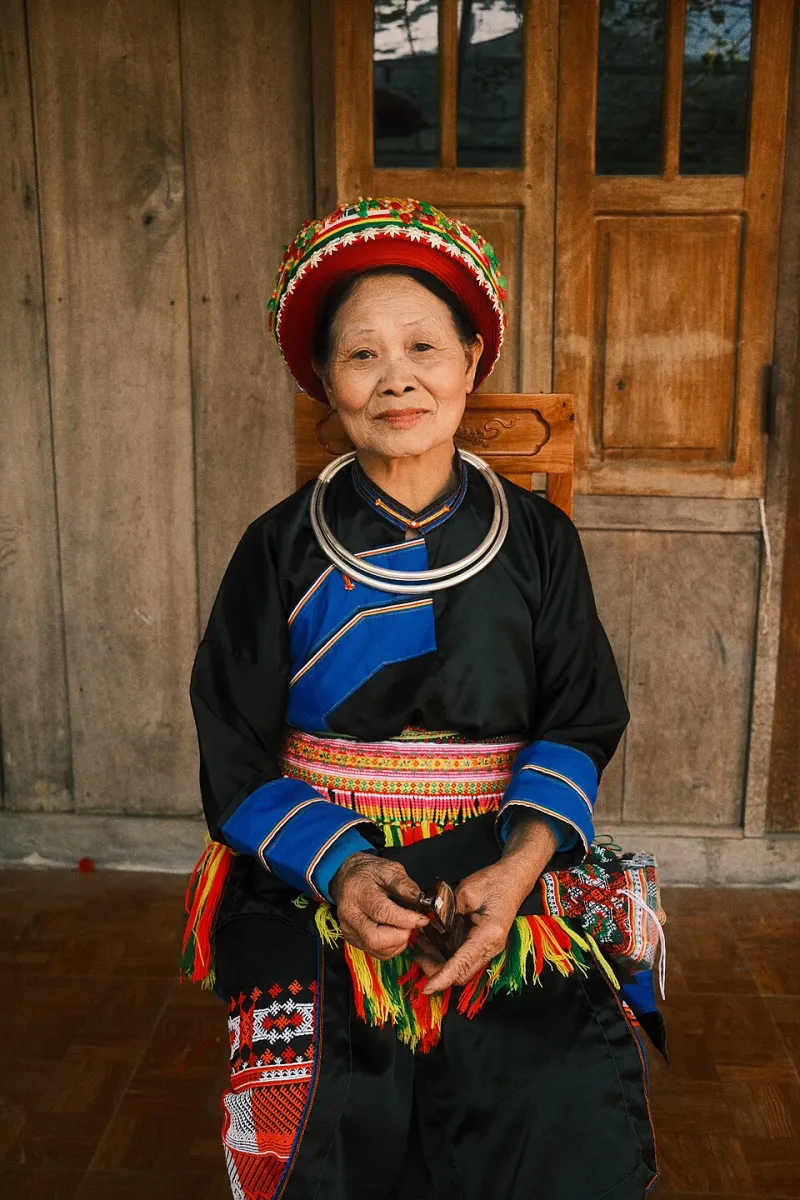
Threads That Transform: The Human Stories Behind Every Handcrafted Blouse You Buy
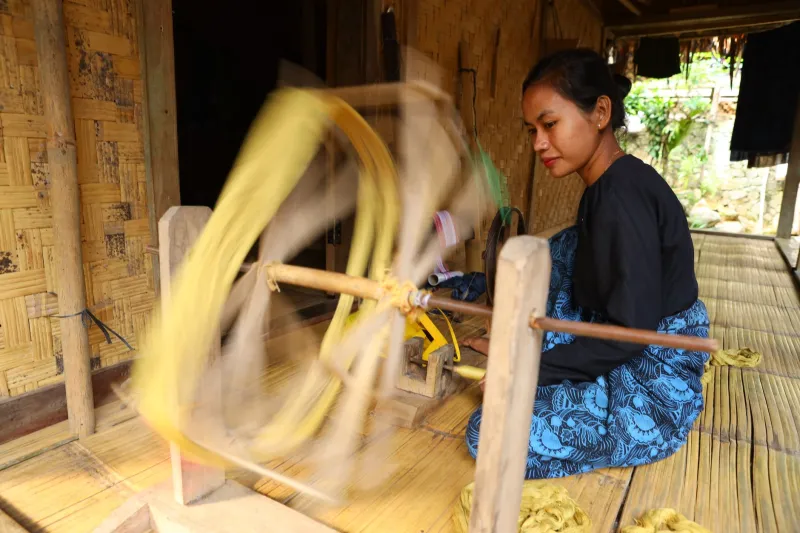
There's a moment — maybe you've had it — when you're holding a beautifully embroidered blouse and you wonder: who made this? Not in a vague, abstract way, but genuinely. Whose hands worked those stitches? Where did they learn? What did they do with the money you spent?
Those aren't just feel-good questions. They're the beginning of understanding what's actually at stake when American shoppers choose handcrafted ethnic blouses over mass-produced alternatives. The economics are real, the ripple effects are measurable, and the stories are worth knowing.
The Math That Actually Matters
Let's start with some numbers that put things in perspective. According to the International Labour Organization, the global artisan sector is the second-largest employer in developing economies, right behind agriculture. Millions of textile workers — the overwhelming majority of them women — depend on the demand for handcrafted goods to sustain their households.
When a single blouse sells for $80 through an ethical supply chain, a meaningful portion of that price travels back to the maker. Compare that to a $12 machine-made knockoff, where the artisan equivalent earns pennies — or nothing at all, because there is no artisan. The difference isn't just philosophical. It's the difference between a family that can pay rent and one that can't.
What makes handcrafted ethnic blouses particularly powerful in this equation is that they're not just products. They're skill-intensive, culturally specific, and impossible to replicate at scale without losing what makes them valuable. That uniqueness is the artisan's leverage — and your purchase protects it.
Fatima's Embroidery Circle in Fez
Fatima Benali has been embroidering traditional Moroccan blouses since she was eleven years old, learning from her mother the way her mother learned from hers. Today, at 43, she leads a cooperative of 14 women in the medina of Fez, each specializing in a different regional embroidery style.
Before international buyers started seeking out their work directly — bypassing the middlemen who once pocketed most of the margin — Fatima's cooperative earned just enough to survive. Now, with fair-trade partnerships in place, the group has collectively funded three of their children's university educations, renovated a shared workspace, and even hired a young woman from the neighborhood to help manage online orders.
"When someone in America wears something we made," Fatima has said through her cooperative's social media, "we feel like a part of us traveled there. It matters to us that they know what they're wearing."
That sense of connection — maker to wearer — is something no algorithm can manufacture.
Preserving Techniques on the Verge of Disappearing
Beyond individual livelihoods, there's another dimension to this story that often gets overlooked: the survival of textile techniques that exist nowhere else on earth.
Take the art of double ikat weaving in Patan, India, where craftspeople from the Salvi community create Patola silk blouses using a dyeing and weaving process so complex that a single yard of fabric can take months to complete. UNESCO has recognized this tradition as an endangered cultural heritage. The number of master weavers who still know the technique has dropped to fewer than a dozen families.
Every time a Patola blouse sells at a price that reflects its true value, it gives the next generation a reason to stay and learn instead of leaving for factory work in the city. Economic viability is, quite literally, what keeps these traditions breathing.
The same story plays out across Guatemala with hand-woven huipil-inspired blouses, across Vietnam with the indigo-dyed textiles of the Hmong hill tribes, and across West Africa with the kente and aso-oke weaving communities that have clothed royalty for centuries. The thread connecting all of them is the same: demand from informed buyers sustains what no museum or government program alone can save.
The Education Effect
One of the most consistent findings in fair-trade research is what happens when women artisans earn stable, fair incomes: they invest in their children's education at dramatically higher rates than when income is controlled by male household members or intermediaries.
In Chiapas, Mexico, a textile cooperative called Sna Jolobil — which translates roughly as "house of the weaver" — has documented this effect directly. Since establishing fair-market pricing for their traditional brocade blouses, member families have seen secondary school completion rates among their daughters rise by more than 60 percent over a decade. Girls who might have dropped out to help support the household are now finishing school, and some are going on to study textile design, bringing new energy back to the very traditions their mothers preserved.
Your blouse purchase didn't write those school fees. But it was part of the system that made them possible.
How to Know Your Purchase Is Doing What You Think It Is
Not every "handcrafted" or "artisan" label tells the full story, and it's worth being a thoughtful shopper. Here are a few markers that signal genuine impact:
- Direct sourcing or cooperative partnerships: Look for retailers who can name the specific community or maker group they source from, not just the country.
- Transparent pricing: Ethical sellers are usually willing to explain how the price breaks down. If that information is nowhere to be found, that's a clue.
- Fair-trade or similar certifications: Organizations like the World Fair Trade Organization and Fair Trade USA set standards for wages and working conditions that are independently verified.
- Storytelling that goes beyond aesthetics: Brands genuinely invested in artisan welfare tend to share the who and how, not just the what.
At Mani Blouse Market, we take sourcing seriously because we believe the story behind a blouse is as important as the blouse itself. When you shop with intention, you're not just building a wardrobe — you're participating in an economy that puts human dignity at the center.
The Bigger Picture
Fashion is often talked about as something frivolous, something separate from the "real" issues of poverty, equity, and cultural survival. But the truth is messier and more interesting than that. The clothes we choose to wear — and who we choose to buy them from — are economic decisions with consequences that travel far beyond our closets.
That embroidered blouse hanging in your wardrobe right now? It might be helping a weaver in Rajasthan keep her workshop open. It might be paying for a teenager's school uniform in Guatemala City. It might be the reason a master dyer in Kyoto decided to take on an apprentice instead of retiring the technique for good.
Fashion, at its best, is a conversation between cultures. When we choose to listen — really listen, through the way we spend — that conversation can change lives. One blouse at a time.