Stitched Into the Story: Wearing Your Family's Blouse in the Life They Dreamed For You
There's a blouse sitting in Priya Nair's Chicago apartment that has never been to a store. It didn't come with a tag, a receipt, or a return policy. It came wrapped in tissue paper inside a suitcase her mother brought from Kerala, tucked between a jar of homemade pickle and a stack of family photographs. The blouse is silk, deep peacock blue, embroidered at the collar with tiny gold flowers that Priya used to trace with her finger as a kid.
She wore it to brunch last spring. Over wide-leg jeans. With white sneakers.
"My mom saw the photo on Instagram and called me immediately," Priya laughs. "Not to scold me — she was just so happy. She said, 'That's exactly why I brought it.'"
For a growing number of American women, the most meaningful piece in their wardrobe isn't something they bought. It's something they received — from a grandmother, an aunt, a mother who believed that a blouse could carry a blessing across a border. And figuring out how to actually wear that piece, in this life, in this city, in this decade, is one of the most quietly personal style challenges out there.
The Weight of a Gifted Garment
Here's the thing about inherited clothing: it comes with invisible instructions. Not the kind printed on a care label, but the emotional kind. The ones that whisper be careful and don't ruin it and do justice to this.
Maria Delgado, a 34-year-old teacher in San Antonio, spent three years with her late abuela's embroidered blouse folded in a drawer before she wore it outside the house. "I was scared," she admits. "What if I spilled something on it? What if I wore it wrong? What does 'wrong' even mean for something that personal?"
That paralysis is real, and it's common. When a garment carries family memory, it stops feeling like clothing and starts feeling like a relic — something to be preserved, not worn. But that instinct, however loving, can actually work against the intention behind the gift.
"My grandmother didn't make that blouse so it could sit in a box," Maria says. "She made it to be worn by someone who loved her. Keeping it folded forever felt like the more disrespectful choice."
She finally wore it to a school event last fall. Paired with dark trousers and block-heeled boots. She got three compliments before first period.
What These Blouses Actually Look Like
Inherited ethnic blouses span an enormous range of styles, and that variety is part of what makes them so adaptable to American wardrobes. We're talking:
- South Asian silk blouses with intricate mirror work or zari embroidery, designed as part of a sari set but completely wearable as standalone tops
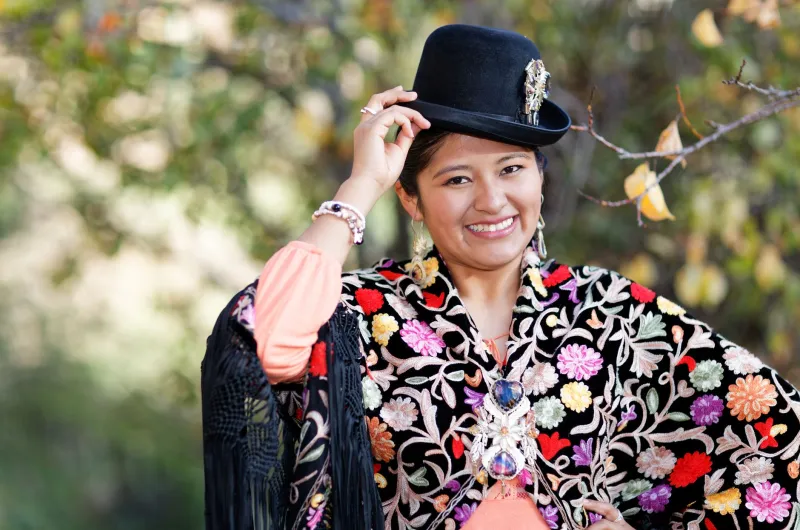
- Mexican hand-embroidered blouses (often called blusas bordadas) featuring bright floral motifs from regions like Oaxaca or Puebla
- West African wax-print tops cut in traditional silhouettes but bold enough to anchor any modern outfit
- Filipino barong-inspired blouses made from pineapple fiber or jusi, delicate and breathable with intricate woven detail
- Eastern European peasant blouses with white-on-white embroidery that translates effortlessly into contemporary cottagecore and boho aesthetics
What they share is craft. These are garments made slowly, often by hand, by people who cared about every stitch. That quality doesn't expire.
Making It Work in Your Actual Life
The styling question — how do I wear this in 2024 without it feeling like a costume or a museum piece — is where things get practical.
The women we spoke with had a few approaches that kept coming up.
Anchor it with the familiar. Pairing a heavily embroidered or patterned blouse with something simple — straight-leg jeans, a solid-color midi skirt, tailored trousers — lets the blouse speak without the whole outfit shouting. The contrast between the traditional piece and a modern basic is actually what makes the look feel intentional rather than accidental.
Wear it for real occasions, not just special ones. Priya's brunch moment is instructive. Saving an inherited blouse only for weddings or cultural events puts it back in the drawer for 350 days a year. Wearing it on a regular Saturday — to a farmer's market, a birthday dinner, a work meeting — is what makes it part of your wardrobe instead of a costume you occasionally try on.
Let the care instructions guide you, not stop you. Yes, silk needs gentle handling. Yes, hand embroidery shouldn't go in the dryer. But knowing how to care for a garment properly isn't a reason to avoid wearing it — it's just the small tax you pay for owning something worth keeping.
Ask the person who gave it to you. This one sounds obvious, but it's underused. Calling your mom or aunt and asking how they used to wear it can unlock styling ideas you'd never think of on your own. It also turns the blouse into a conversation, which is kind of the whole point.
What We Owe to Clothes That Carry History
Nadia Osei, a Brooklyn-based graphic designer whose mother brought several blouses from Ghana when she immigrated in the 1990s, thinks about this question a lot.
"There's this pressure to wear it 'correctly' — like there's a right way to honor where it came from," she says. "But I think the most honest way to honor it is to actually live in it. To make it mine."
She's built a personal rule: at least one piece from her mother's collection makes it into her wardrobe rotation every month. Sometimes it's dressed up, sometimes it's dressed way down. Last month she wore a bright kente-trimmed blouse with biker shorts to a rooftop party. "My mom would have styled it differently," Nadia says. "But she also moved to a new country and built a whole new life. I think she gets it."
That's the thread running through all of these stories — the idea that adapting something to your life isn't a betrayal of where it came from. It's actually the continuation of the same story. Your grandmother made a blouse. Your mother carried it. You wear it to brunch, or to work, or to a rooftop party in Brooklyn. The story doesn't end. It just picks up where they left off.
A Wardrobe That Remembers
At Mani Blouse Market, we believe that the best blouse you'll ever own might already be in your family. But if you're building a collection from scratch — or looking for a piece that could become someone's heirloom someday — the same principles apply: look for craft, look for meaning, look for something made with care.
Because the blouses worth keeping are the ones that have something to say. And the ones passed down through families have already proven they know how to last.
Wear them. They were made for exactly this.