Twenty Blouses, Zero Outfits: The Real Reason Your Closet Feels Empty
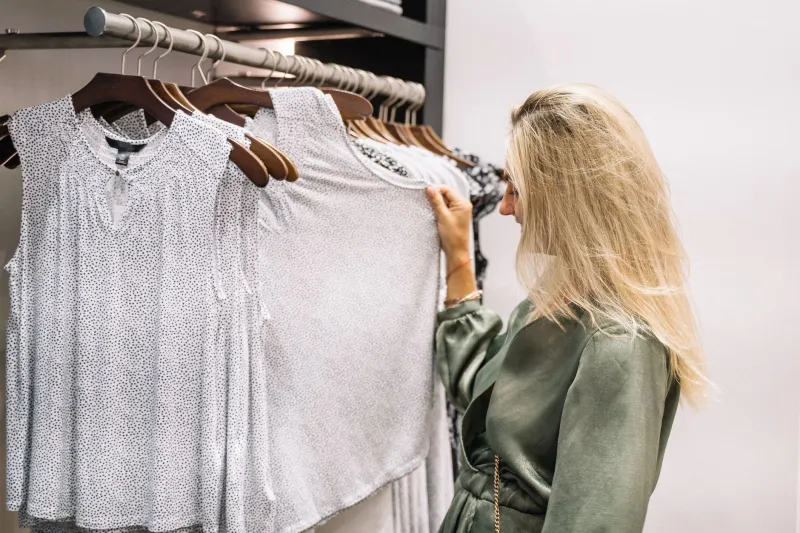
You open the closet door. Blouses everywhere — folded, hanging, maybe a few draped over the chair you've unofficially designated as a second closet. And yet, somehow, you stand there in a bathrobe muttering that you have absolutely nothing to wear.
You're not imagining it. And you're definitely not alone.
This is one of the most common frustrations among fashion-conscious shoppers, and it has a name: the blouse paradox. More pieces, less wearability. More options, more paralysis. It sounds counterintuitive, but the math actually tracks once you understand what's really going on.
The Aspiration Trap
Here's the honest truth about most of those blouses hanging in your closet: you didn't buy them for the life you're living. You bought them for the life you were imagining when you clicked "add to cart."
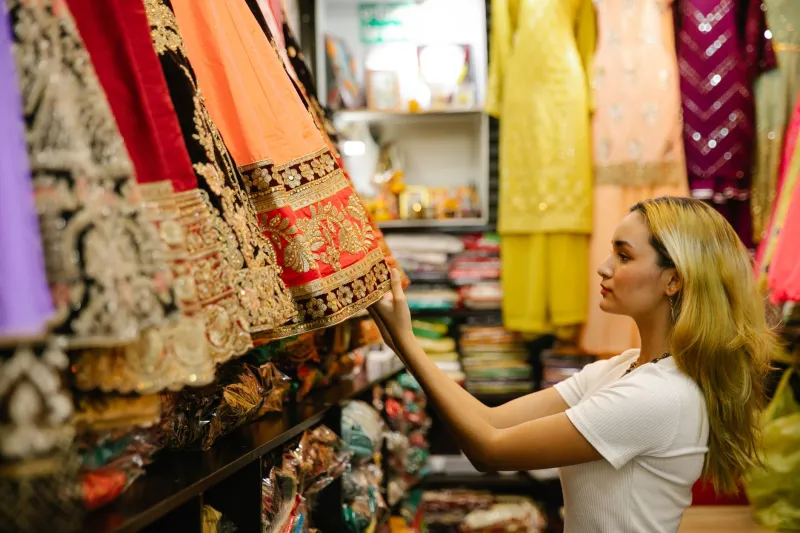
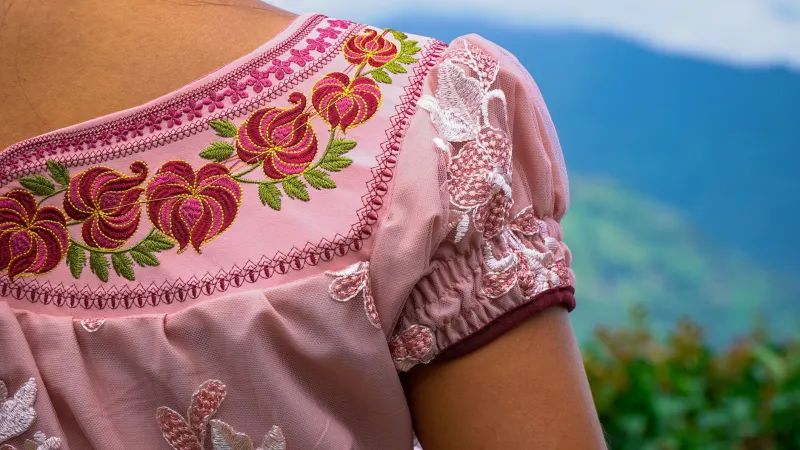
That gorgeous hand-embroidered kurta you found online? You pictured yourself wearing it to a rooftop dinner party. The silk blouse with the mirror-work detailing? A weekend farmers market, maybe a gallery opening. The bold printed top with the bell sleeves? A future version of you who goes to brunch every Sunday.
Aspiration shopping is completely human. It's also the fastest way to build a closet full of clothes you never actually reach for. When pieces are purchased for imaginary occasions rather than real ones, they become display items — things you admire but don't integrate.
Ethnic and traditional blouses are especially vulnerable to this pattern. They're often so beautiful, so visually rich, that the purchase feels justified on aesthetic merit alone. But beauty doesn't equal wearability. A blouse you love looking at and a blouse you actually wear are two very different garments.
Why More Choices Create More Paralysis
Psychologists have a term for this: decision fatigue. When your closet holds twenty blouses with no clear system connecting them, every morning becomes a micro-negotiation. Does this work with these pants? Is this too much for a Tuesday? Should I save this for something special?
The more pieces you have without a cohesive thread running through them, the harder it is to get dressed with any confidence. You end up defaulting to the same three items on rotation — the ones that feel safe — while everything else collects dust.
This is especially pronounced when your collection spans wildly different aesthetics. A casual cotton peasant blouse doesn't naturally talk to a formal zari-embroidered piece. A breezy boho top doesn't connect easily with a structured traditional kurta. Without intentional curation, your closet becomes a collection of individual statements that don't add up to a coherent wardrobe.
The One-Wear Wonder Problem
Another culprit? Blouses that were worn exactly once — for the specific occasion they were purchased for — and never touched again.
This happens constantly with ethnic and cultural pieces in American wardrobes. You buy something stunning for a Diwali celebration, a wedding, a cultural festival. You wear it, you feel amazing, you get compliments. Then it goes back in the closet and somehow never comes out again because it feels "too special" for ordinary days.
The irony is that the pieces with the most craftsmanship, the most intentional design, end up being the least-used items you own. Meanwhile, a plain white top gets worn twice a week.
Breaking this cycle means actively giving yourself permission to wear the good stuff. Not saving it. Not protecting it from Tuesday. Wearing it.
How to Actually Audit What You Have
Before you buy a single new thing, it's worth spending an honest hour with your existing collection. Pull everything out. Not just a quick scroll through the rack — actually take it all out and look at it.
Ask yourself three questions about each piece:
One: Can I build at least two complete outfits around this right now, with what I already own? If the answer is no, that blouse is living in isolation. It might be beautiful, but it's not working.
Two: Have I worn this in the last six months? If not, ask yourself why. Is it the fit? The occasion mismatch? The fact that you don't actually love it as much as you thought you did when you bought it?
Three: Does this feel like me — the me who actually gets dressed every morning — or the me I was hoping to become? This one stings a little, but it's the most clarifying question you can ask.
Building a Wardrobe That Works Harder
The goal isn't to own fewer blouses for the sake of minimalism. It's to own the right blouses for the life you're actually living, with enough intentional overlap that they genuinely work together.
A few principles that help:
Anchor pieces first. Before adding anything new, identify the two or three blouses you already reach for constantly. What do they have in common — fabric weight, color palette, silhouette? That's your baseline. New additions should complement this foundation, not contradict it.
Stop saving things for special occasions. If a blouse is too beautiful for a regular Tuesday, it's going to sit unworn for months. The fix isn't to wait for a special occasion — it's to make Tuesday feel special. Wear the embroidered piece to the grocery store. Pair the silk top with jeans. Give your everyday outfits the upgrade they deserve.
Buy for your actual body and actual schedule. Not the body you're working toward, not the schedule you wish you had. The blouse that fits perfectly right now, for the mornings you actually have, will always outperform the aspirational piece you're waiting to grow into.
Think in outfits, not pieces. When you're considering a new blouse, mentally style it three ways before purchasing. If you can't picture three distinct outfits using things you already own, it might not be the right addition yet.
The Quality Shift That Changes Everything
One of the most effective ways to break the accumulation cycle is to genuinely slow down and invest in fewer, better pieces. This isn't a lecture about fast fashion — it's practical math.
A blouse you love, that fits beautifully, that works with multiple things in your closet, and that you reach for again and again delivers exponentially more value than five blouses that each get worn once. The cost-per-wear calculation on a well-chosen ethnic blouse — especially one that's handcrafted and built to last — almost always wins over a drawer full of impulse buys.
When you start thinking about your wardrobe that way, shopping changes. You become more deliberate. You ask harder questions before purchasing. And paradoxically, you end up feeling like you have more to wear, even as the total number of pieces goes down.
The Closet You Actually Deserve
The blouse paradox isn't about having too much. It's about having the wrong things, collected without a plan, for versions of yourself that don't quite match who you are on an average morning.
The fix is less dramatic than a full closet purge and more satisfying than another shopping haul. It's just a shift in how you think about what you own, what you reach for, and what you're actually buying when you shop.
Start with what you have. Be honest about what's working. And the next time you add something new, make sure it's earning its place — not just taking up space while you stand in your bathrobe insisting you have nothing to wear.