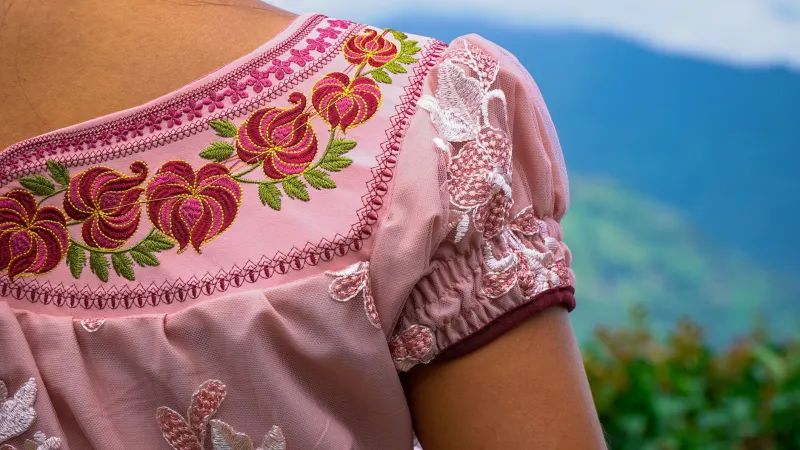
Why That First Ethnic Blouse Feels So Impossible to Buy (And How to Do It Anyway)
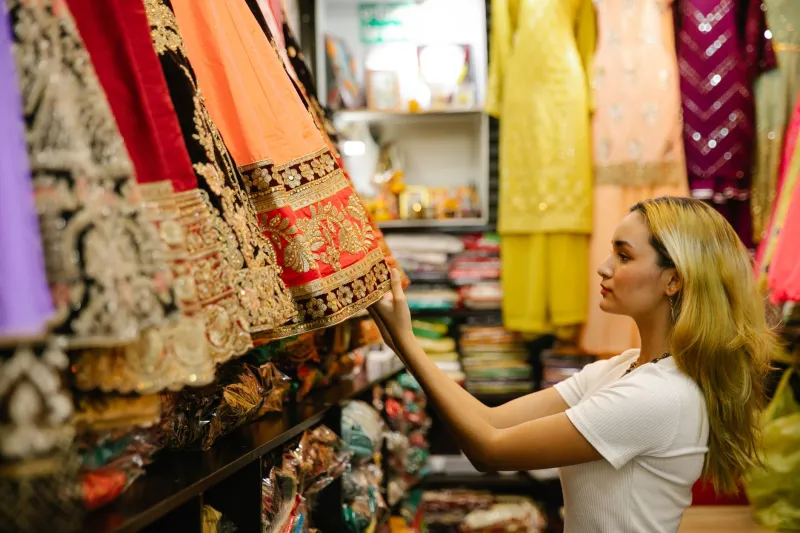
You've been eyeing it for months. Maybe it was a hand-embroidered kurta top at a weekend market, or a silk blouse with mirror-work detailing that popped up in your Instagram feed. You loved it immediately. You thought about it later that same night. And then — you didn't buy it.
If that sounds familiar, you're far from alone. Plenty of American shoppers spend years admiring ethnic blouses without ever actually committing to one. And it's not about money or availability. Something else is holding them back. Something quieter, and a little harder to name.
Let's talk about what that something actually is.
The Fear Has a Name (Several, Actually)
Fashion psychologists who study how people relate to clothing describe a phenomenon sometimes called "style identity threat" — the discomfort that arises when a piece of clothing feels beautiful but somehow not for you. It's not logical. It's emotional. And it shows up constantly when American shoppers encounter ethnic or traditional blouses for the first time.
Dr. Dawnn Karen, a fashion psychologist and author based in New York, has written extensively about how our clothing choices are deeply tied to how we perceive our own identity. When a garment comes from a cultural tradition that isn't our own, many shoppers experience a kind of internal stall — a moment where admiration collides with uncertainty about whether they have the "right" to wear it.
That uncertainty usually shows up as one of three fears:
Fear of cultural misstep. This is the big one. American shoppers, especially in recent years, are genuinely thoughtful about the line between cultural appreciation and appropriation. That's not a bad thing — it means people are paying attention. But it can tip into paralysis, where even respectful, celebratory engagement with another culture's textile traditions starts to feel risky.
Fear of fit and proportion. Traditional blouses from South Asia, West Africa, Latin America, and other regions are often cut differently than what most American women are used to. The silhouettes, necklines, and lengths don't always match the sizing logic of mainstream US brands. That uncertainty — "will this actually work on my body?" — is enough to make even enthusiastic shoppers hesitate at checkout.
Fear of styling it wrong. A lot of women worry that an ethnic blouse will look out of place or costumey if it isn't paired perfectly. They imagine needing a whole new wardrobe to "match" it, or they assume they'll look like they're trying too hard — or not hard enough.
What Real Shoppers Say
We asked a few customers to share what almost stopped them from buying their first ethnic piece.
Marcela, 34, from Austin, said she spent almost a year saving photos of embroidered Mexican blouses before she finally bought one. "I kept thinking, I'm not Mexican, is this okay? But then I actually started reading about the artisans who make them, and I realized that buying their work — and wearing it with genuine appreciation — was the whole point."
Tanya, 28, from Atlanta, had a different hesitation. "My body is curvier than what I imagined the blouse was 'made for.' I didn't think I'd look right in it." She eventually ordered a hand-block-printed Indian blouse after reading detailed size guides and return policies. "It fit beautifully. I'd wasted a year worrying for nothing."
And Jennifer, 41, from Portland, admitted her block was purely about styling. "I had no idea what to wear it with. Jeans? Trousers? Did I need special shoes?" She ended up pairing her first ethnic blouse — a silk dupion piece with gold trim — with straight-leg jeans and flat sandals. "Everyone asked where I got it. It was so easy."
These stories aren't outliers. They're the norm.
The Cultural Appreciation Question, Honestly Answered
Let's address the biggest hesitation head-on: is it okay to wear ethnic blouses if they're not from your own heritage?
The short answer is yes — with some intention behind it. The fashion community and many cultural scholars draw a clear line between appropriation (taking something sacred or significant without understanding or respect) and appreciation (engaging with another culture's artistry in a way that honors its origins).
Buying an ethnic blouse from a marketplace that supports the artisans who make it, learning even a little about the textile tradition it comes from, and wearing it with genuine care rather than as a costume — that's appreciation. That's exactly what this kind of shopping is meant to be.
You don't need to be an expert. You just need to be curious and respectful. Those two things go a long way.
Fit Anxiety Is Real, But Solvable
Here's the practical truth about fit: ethnic blouses often come in more flexible sizing than you'd expect. Many traditional styles — think flowy kurtas, wrap-front designs, or boxy embroidered tops — are inherently accommodating of different body types. The silhouettes aren't trying to conform to one specific shape.
That said, it helps to know a few things before you shop:
- Read the measurements, not just the size label. A "medium" in one brand's ethnic sizing might be different from what you're used to. Look for actual bust, waist, and length measurements.
- Check the fabric. Natural fabrics like cotton and linen have more give. Structured silks or heavily embroidered pieces may run differently.
- Look for flexible return policies. Reputable marketplaces make it easy to exchange or return if the fit isn't right. That safety net alone should lower the stakes considerably.
Styling It Doesn't Have to Be Complicated
Here's the thing nobody tells you: ethnic blouses are often easier to style than you'd think, because they do a lot of the visual work themselves. A beautifully embroidered or printed blouse is already the star of the outfit. Your job is just to let it shine.
Start simple. Pair your first ethnic blouse with something you already wear and love — your favorite jeans, a classic trouser, a simple maxi skirt. Keep the rest of the outfit neutral. Let the blouse lead. That's it. That's the formula.
You don't need to build an entirely new wardrobe around it. You don't need to match it to a specific cultural aesthetic. You just need to wear it like you mean it — which, after all this deliberation, you definitely do.
The Permission You Didn't Know You Needed
Sometimes the only thing standing between you and that blouse is the simple act of deciding you're allowed to have it. Fashion has always moved across cultures, carried by curiosity, admiration, and the very human desire to wear something beautiful.
Your hesitation says something good about you — it means you're thoughtful. But at some point, thoughtfulness has to give way to action. The blouse you've been eyeing isn't going to look any less stunning next month. And you're not going to feel any more "ready" if you keep waiting.
Buy the blouse. Wear it with intention. And let yourself enjoy it.
That's the whole code, right there.