The $200 Blouse That Changed How I Think About Money, Fashion, and Everything In Between
I still remember standing at the checkout screen, cursor hovering over the "Place Order" button, my stomach doing that specific anxious flip it reserves for financial decisions I'm not entirely sure about. The blouse was a hand-embroidered kurta-style top in deep indigo, with intricate mirror work along the neckline and sleeves that caught the light in a way no mass-produced garment ever could. It was gorgeous. It was also two hundred dollars — roughly four times what I'd typically spend on a single piece of clothing.
I bought it anyway. And honestly? It broke something open in me.
The Sticker Shock Is Real — Don't Let Anyone Tell You Otherwise
Let's not romanticize the initial reaction, because it wasn't pretty. The confirmation email arrived, and I immediately started doing the mental math that every budget-conscious shopper knows too well: I could have bought eight blouses from that fast-fashion site for this price. I could have paid a utility bill. I could have — should have — been smarter.
That spiral is so common, so deeply ingrained in the way most of us in the US have been trained to think about clothing. We've grown up in a culture that equates more with better, that treats a full closet as evidence of savvy shopping rather than a symptom of overconsumption. Spending a lot on one thing feels reckless. Spending a little on many things feels responsible, even when the math — the real math — tells a completely different story.
Here's the thing about that $200 blouse: within the first month, I wore it five times. To a friend's Diwali gathering, to a dinner out in the city, layered under a blazer for a creative meeting, to my cousin's engagement party, and once — defiantly, joyfully — to a Saturday farmer's market with jeans and sandals. Each time, someone asked about it. Each time, I got to talk about where it came from, who made it, what the embroidery technique was called.
The blouse wasn't just clothing anymore. It had become a conversation.
When Guilt Gives Way to Clarity
Something interesting happens after you wear an expensive piece enough times. The guilt starts to dissolve, not because you've justified the purchase emotionally, but because the numbers actually work out. Divide $200 by fifty wears — which, for a versatile statement piece, isn't a stretch over a few years — and you're looking at four dollars per wear. That's less than most people spend on a coffee.
Compare that to the $25 blouse that pilled after three washes, faded after five, and quietly disappeared from your rotation within a season. That "cheap" blouse might have cost you more per wear than the artisan piece you talked yourself out of buying.
This isn't a lecture about spending more money. It's an invitation to think differently about what spending well actually looks like.
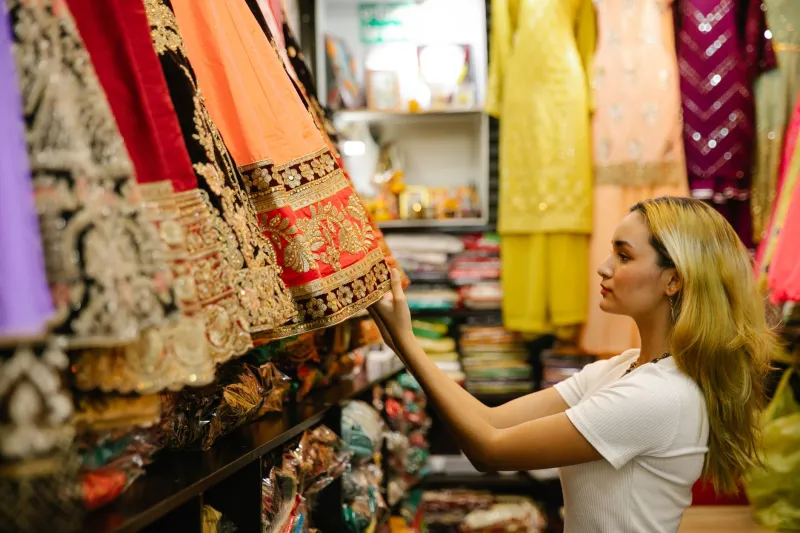
At Mani Blouse Market, we see this shift happen with shoppers all the time. Someone comes in looking for an affordable ethnic blouse for a one-time event, and they leave with something they're still reaching for three years later. The intention behind the purchase changes the relationship with the garment. When you buy something because it's on sale, you wear it until it's convenient to stop. When you buy something because it genuinely moved you — because the craftsmanship made you pause, because the design felt like it was made for your specific life — you fight for it. You hand-wash it. You store it carefully. You style it in ways you never expected.
The Hidden Cost of Playing It Safe
For most of my adult life, I avoided spending real money on clothing by convincing myself I was being practical. My closet was full of safe choices — neutral basics, interchangeable pieces, nothing that asked too much of me or from me. It looked fine. It felt like nothing.
The problem with playing it safe in fashion is that you end up with a wardrobe that functions but doesn't fit — not in the physical sense, but in the deeper sense of the word. Nothing in that closet reflected who I actually was, what I cared about, or where I came from. It was a collection of compromises dressed up as practicality.
That indigo blouse with the mirror work? It reflected something real. My grandmother had a salwar kameez with similar embroidery that I used to run my fingers along as a kid. Wearing a piece with that kind of craft felt like reclaiming something I'd quietly set aside in the name of fitting in, being low-maintenance, not standing out too much.
That's the part nobody talks about when they discuss investment dressing. Yes, the cost-per-wear math matters. Yes, quality construction means longevity. But the deeper value of owning one truly exceptional piece is what it does to your sense of self. It gives you permission to take up space in a way that a rack of forgettable basics never will.
How One Purchase Can Rewire an Entire Wardrobe
After the indigo blouse, I started shopping differently. Not more expensively — differently. I started asking harder questions before buying anything. Do I love this, or do I just like the price? Will I still reach for this in two years? Does this reflect something true about me, or am I just filling a gap?
I bought less. I wore more. My closet shrank and somehow felt bigger.
I also started paying more attention to the stories behind what I was buying. Handcrafted ethnic blouses carry histories — of textile traditions, of artisan communities, of techniques passed down through generations. When you invest in a piece like that, you're not just buying fabric and thread. You're participating in something that extends far beyond your own wardrobe.
That's a kind of value that doesn't show up on a price tag, but it's real. And once you've felt it, it's hard to go back to treating clothing as disposable.
The Permission You Didn't Know You Needed
If you've been eyeing a blouse that feels just out of reach — financially, emotionally, practically — consider this your gentle nudge to think it through more carefully before walking away. Not every expensive piece is worth it. But some of them are worth more than their price suggests, and the only way to know is to ask the right questions.
What would you wear it with? How often does that occasion come up? Does it feel like you, or does it feel like a costume? Is the craftsmanship something you can see and feel, or is the price just branding?
If the answers lean toward yes, toward often, toward this is exactly me — trust that. Your wardrobe doesn't need more. It might just need one thing that's genuinely, undeniably right.
Sometimes the most intentional thing you can do is spend well once, instead of spending carelessly many times over. That $200 blouse taught me that. I'm still learning everything else it has to say.