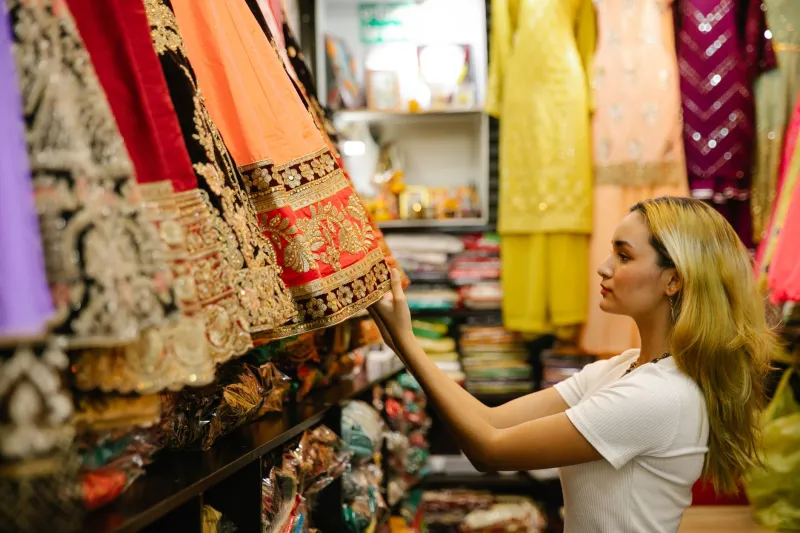
The One Blouse You Removed That Finally Made Everything Click
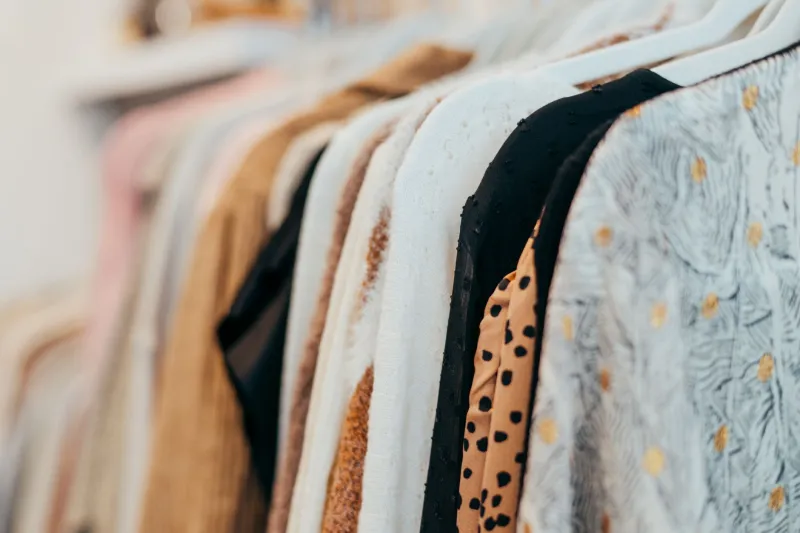
There's a counterintuitive truth hiding inside every overstuffed closet: clarity doesn't come from more choices. It comes from fewer ones. While most style advice pushes you toward the next purchase — the perfect embroidered kurta, the must-have silk blouse, the trending mirror-work top — real style breakthroughs often happen in the opposite direction. They happen when you pull something out.
This is the psychology of negative space in wardrobing, and it's quietly changing how fashion-conscious women across the US think about their clothes.
What Negative Space Actually Means for Your Wardrobe
In art and design, negative space is the empty area around the subject — the background that gives the foreground room to breathe. In your closet, it works the same way. When you're surrounded by too many options, especially ones that don't quite align with who you are right now, your eye can't settle. You can't see what you actually love because everything is competing for attention.
Removing one category of blouse — even temporarily — acts like pulling a weed from a garden. Suddenly the flowers you actually planted have room to grow. The pieces you genuinely reach for stop getting buried under the ones you keep "just in case."
The fascinating part? The blouse you remove doesn't have to be one you hate. Sometimes it's one you thought you loved.
When Oversized Stopped Serving Her
Take Maya, a 34-year-old graphic designer from Austin, Texas, who had accumulated nearly a dozen oversized blouses over three years. Flowy silhouettes, breezy linens, relaxed ethnic tunics — she gravitated toward them during the pandemic when comfort was everything. But when she finally returned to in-person client meetings, she noticed something uncomfortable: she kept avoiding her own reflection.
"I'd stand in front of my closet and feel nothing," she says. "Everything looked the same. Shapeless. And I didn't feel like me anymore."
One weekend, on a whim, she boxed up every oversized piece and shoved them into her hallway closet. What remained was smaller — a handful of fitted kurtas, two structured cotton blouses with delicate block-print details, and a silk button-down she'd forgotten she owned.
The shift was immediate. "I could actually see what I had. And I realized I'd been hiding behind volume when what I actually love is structure with beautiful detail work."
She hasn't brought the oversized pieces back.
The Heavily Embellished Edit That Surprised Everyone (Including Her)
For Priya, a 41-year-old event planner from New Jersey, the revelation came from the opposite direction. Her closet was a festival of sequins, zari embroidery, mirror work, and beaded collars — the kind of blouses that demand attention. She'd built the collection over years, drawn to the richness of traditional South Asian craftsmanship.
But she noticed she was always reaching for the same two plain silk blouses when she actually needed to get dressed and go.
"The embellished ones felt like costumes," she admits. "Beautiful costumes I was saving for a party that never came."
She pulled every heavily embellished piece and let herself live with just the simpler ones for a month. What she discovered surprised her: she missed the embellishment — but only specific kinds of it. Delicate threadwork, yes. Chunky sequins, not really.
"Removing everything helped me figure out what I actually wanted to come back to," she says. "Now I shop with so much more intention. I know exactly what level of embellishment feels like me versus what I was just attracted to in the moment."
Why Basics Can Be the Biggest Block
Not every wardrobe edit involves removing the dramatic pieces. Sometimes the culprit is the humble basic.
Denver-based yoga instructor Carmen had a drawer overflowing with plain white and cream blouses — her "safe" fallback for years. She wore them constantly but felt perpetually uninspired. When a friend suggested she box them up for 30 days as an experiment, Carmen resisted.
"I thought I'd have nothing to wear," she laughs.
Instead, she was forced to engage with the rest of her closet: a hand-block-printed kurta from a small artisan brand, a soft indigo blouse with subtle embroidery at the hem, a rust-colored linen top she'd bought impulsively and never worn. Without the safety net of her basics, she had to actually try.
"I found out I'm a color person," she says, still sounding a little amazed. "I just never let myself be one because I always defaulted to white."
She kept two plain blouses — genuinely versatile ones — and donated the rest.
The Science Behind Why This Works
Psychologists call it the paradox of choice: the more options we have, the harder it becomes to make decisions and the less satisfied we feel with the ones we do make. This is as true in fashion as it is in grocery stores.
When you remove a category from your wardrobe, you're not just decluttering. You're running a controlled experiment on your own taste. You're giving yourself data — real, lived data — about what you reach for, what you miss, and what you don't miss at all.
This is especially powerful in the context of building a wardrobe that balances traditional and contemporary pieces. When you're drawn to ethnic blouses, artisan craftsmanship, and heritage textiles, the options can feel genuinely overwhelming. There's so much beauty to choose from. Removing one category helps you identify your personal aesthetic within that abundance.
How to Run Your Own Blouse Edit
You don't need a professional stylist or a full weekend to try this. Here's a simple framework:
Pick one category to pause. It could be oversized silhouettes, heavily embellished pieces, plain basics, bold prints, or even a specific neckline style. Choose the category that takes up the most space but that you reach for the least.
Box it up — don't donate it yet. Give yourself 30 days. This removes the anxiety of permanence and lets you actually observe your behavior without pressure.
Notice what you miss. After a week or two, pay attention to the moments when you think "I wish I had my [fill in the blank]." That longing is information.
Notice what you don't miss. This is the more surprising data. The pieces you never think about? They were probably never really yours.
Reintroduce selectively. At the end of the month, bring back only what you genuinely missed. Donate or pass along the rest.
The Closet That Looks Like You
Style clarity isn't about owning fewer things for the sake of minimalism. It's about owning the right things — pieces that feel like an honest expression of who you are, whether that's a richly embroidered ethnic blouse worn to a Tuesday morning coffee or a crisp contemporary kurta paired with your favorite jeans.
The edit isn't the end. It's the beginning. Once you can actually see your closet — once the noise is gone — you start shopping differently. You stop buying what catches your eye in the moment and start choosing what genuinely fits the person you're becoming.
Sometimes the most powerful style move you can make isn't adding something beautiful to your wardrobe.
It's making space for what was already there.