One Piece, Infinite Clarity: How a Single Traditional Blouse Quietly Organizes Your Whole Closet
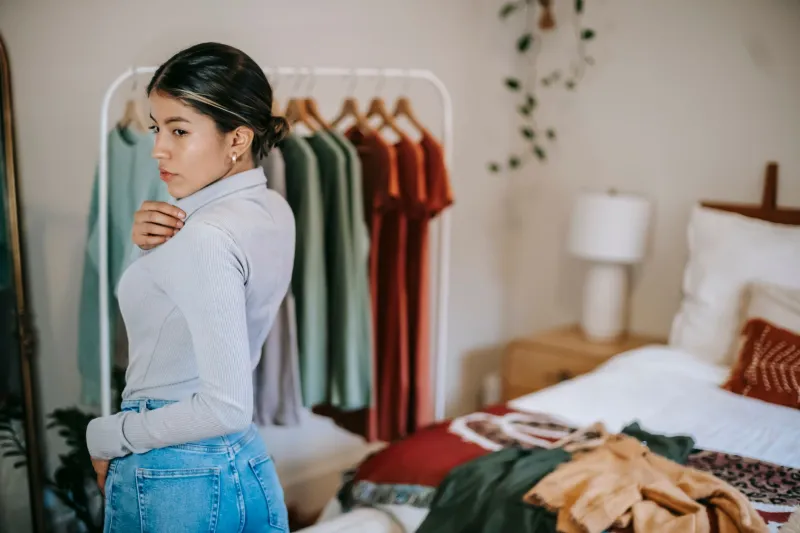
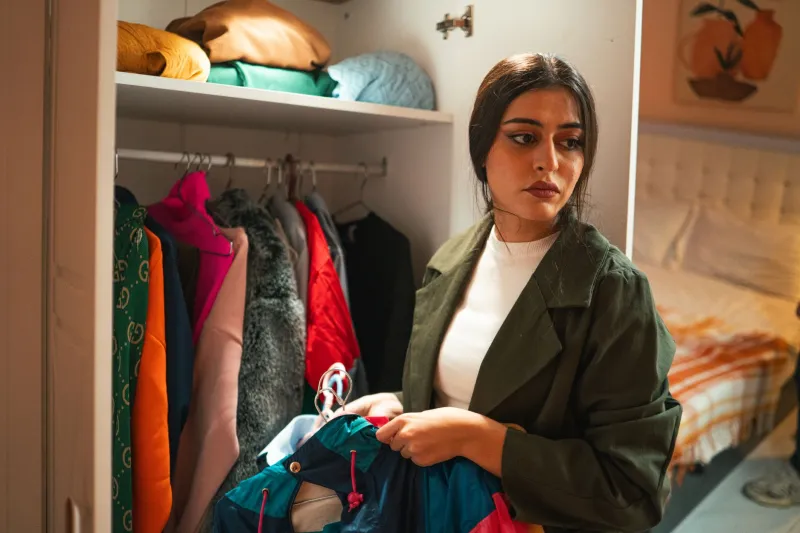
Here's a scenario that probably sounds familiar: You're standing in front of a closet stuffed with clothes, running late, and somehow still convinced you have nothing to wear. You've got options—dozens of them—and that's exactly the problem.
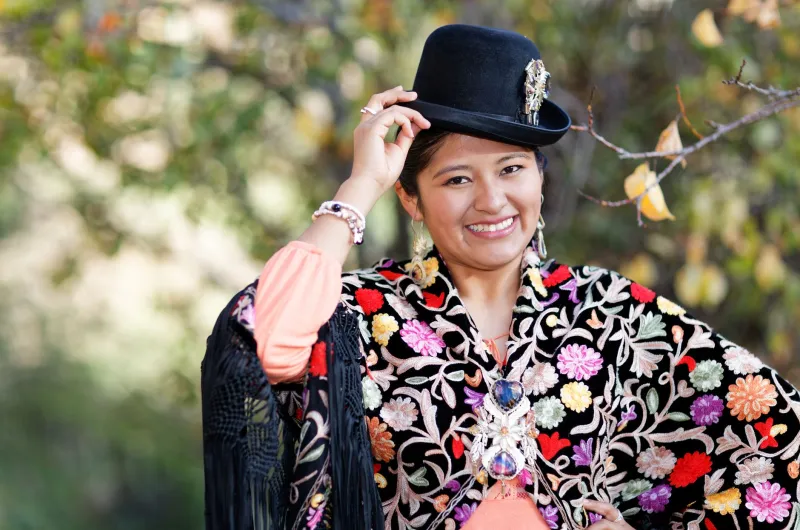
Now imagine pulling out one blouse. A hand-embroidered kurta in a deep indigo. A silk chikankari top with ivory threadwork. A vibrant block-print piece you picked up because it stopped you mid-scroll. You know exactly how it fits. You know which jeans work with it. You know where it belongs in your week. And just like that, the rest of your closet starts making sense around it.
This is what style coaches call the anchor piece effect—and it turns out, traditional and ethnic blouses are particularly good at it.
The Science of Too Many Choices
Decision fatigue is real, and your wardrobe is one of its biggest playgrounds. Psychologist Barry Schwartz popularized the idea in The Paradox of Choice: the more options we have, the harder it is to feel satisfied with any of them. Studies have shown that people make worse decisions—and feel worse about those decisions—as the number of choices increases throughout the day.
Your closet isn't immune. When everything is equally neutral, equally interchangeable, equally fine, nothing feels special. And so you spend mental energy every single morning trying to assemble something that feels intentional out of a pile of pieces that were never meant to anchor anything.
A statement ethnic blouse short-circuits that loop entirely.
"When a client has what I call a 'north star' piece," says personal stylist Dana Reyes, who works with clients in the Chicago area, "the rest of the wardrobe decisions become almost automatic. You stop asking 'what should I wear?' and start asking 'what goes with this?' That's a much easier question to answer."
Why Traditional Blouses Work Better Than Most Anchor Pieces
You could argue that any bold piece could serve as a wardrobe anchor—a statement blazer, a printed wrap dress. And you'd be right, to a point. But ethnic and traditional blouses have a few qualities that make them particularly effective at this job.
They carry inherent intention. A handcrafted blouse—one with mirror work, hand-stitched embroidery, or a regional weave—reads as deliberate. It signals that you made a choice. That energy tends to radiate outward. When you wear something that clearly means something, people treat your whole outfit differently. More importantly, you treat it differently.
They force complementary simplicity. A richly detailed blouse naturally calls for quieter bottoms. Wide-leg trousers in a solid. Dark denim. A simple midi skirt. The blouse does the talking; everything else just needs to show up. This pairing logic is almost built-in, which means fewer decisions, not more.
They're genuinely distinctive. Unlike a generic printed top you might find at any mall chain, a quality ethnic blouse is unlikely to show up on three other people in your office. That uniqueness removes the mental overhead of "is this too common" or "did I already wear this last Tuesday and did anyone notice." It's yours. It's recognizable. It's a brand unto itself within your wardrobe.
The Math Behind Wearing More with Less
Let's get practical for a second. Say you currently own 30 tops. On any given morning, you're theoretically choosing from 30 options. That's 30 potential combinations with each pair of pants, each skirt, each jacket. The number of possible outfits is overwhelming—and yet somehow nothing feels right.
Now you add one traditional blouse that you genuinely love. Not a maybe, not a someday. A piece you bought because it made you feel something.
Suddenly, you start mentally organizing your other pieces around it. Which of your bottoms work with this? Which don't? The ones that don't start to feel less essential. You might even start editing those out. Your 30 tops quietly become 20 that feel intentional rather than accidental.
This is the wardrobe math that minimalists have been talking about for years, but it rarely gets framed this way: addition can create subtraction. One strong piece gives you a standard. Everything else either clears the bar or reveals itself as filler.
"I've seen clients buy one really beautiful ethnic blouse and then spend the next month clearing out clothes they suddenly realize they never liked," Dana says. "The blouse becomes a mirror. It shows them what their actual taste is, and the rest of the closet looks different in comparison."
Finding Your Anchor: What to Look For
Not every blouse will do this job. A great anchor piece needs a few things going for it.
It should be something you'd wear now, not someday. The "saving it for a special occasion" trap is real. If you buy a blouse and immediately relegate it to the back of the closet for a hypothetical dinner party, it can't anchor anything. Pick something you'd genuinely reach for on a Tuesday.
The fit should be non-negotiable. Ethnic blouses, especially those with structured embroidery or traditional silhouettes, often need to be sized carefully. A blouse that fits beautifully doesn't require you to think about it—it just works. One that's slightly off will always feel like a project.
It should have a clear color story. This doesn't mean it needs to be neutral. It means the colors should feel coherent with at least a few things you already own. A deep rust block-print blouse will work with most of your earth tones. A jewel-toned silk kurta might anchor all your blacks and navies. Think about what you already have and let that guide the palette.
It should genuinely excite you. This sounds obvious but it's easy to talk yourself into something safe. The whole point of an anchor piece is that it gives you energy. If you're not a little bit thrilled when you put it on, keep looking.
The Bigger Picture
There's something almost philosophical about what happens when you stop trying to have everything and start building around something. A traditional blouse—especially one that carries craft, history, and intention in its stitching—has a way of making your whole approach to getting dressed feel more grounded.
You're not chasing trends. You're not buying fillers. You're building a wardrobe that actually reflects who you are, one piece at a time.
And it starts, counterintuitively, by adding one thing. The right one thing.
Your closet doesn't need more options. It needs a center of gravity. A well-chosen traditional blouse might just be it.